View Astro Images
Discover our Universe through the pictures I have taken from my backyard.
IMAGE OF THE MONTH: The Triangulum Galaxy M33
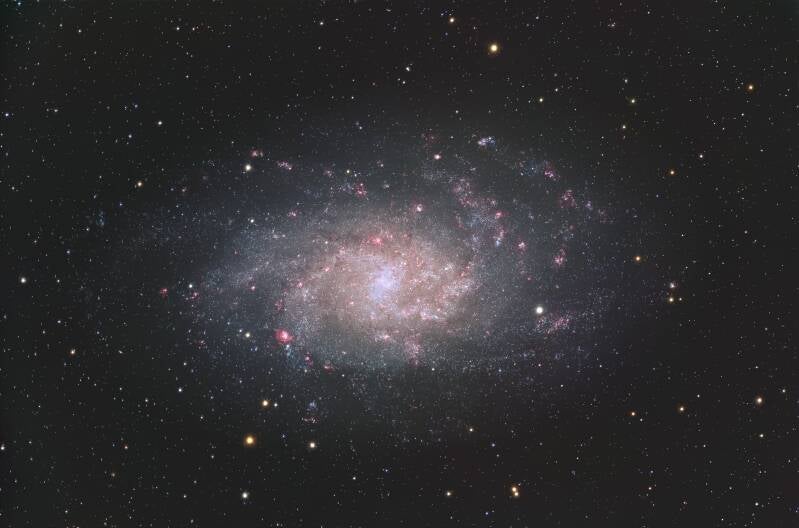
The Triangulum Galaxy designated M33 is one of the 'local' group galaxies. Found in the Autumn constellation of Triangulum it is believed to be 2.88 million light years away and is smaller than our Milkyway galaxy. The galaxy is very difficult to see without binoculars or a telescope. I include a finder chart below.
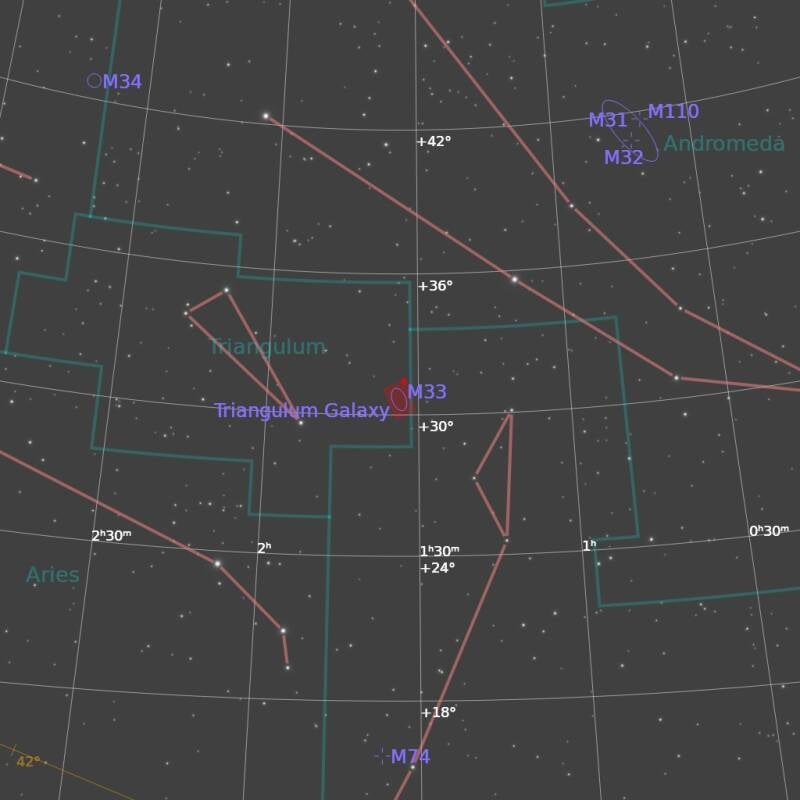

This is an annotated image of M33. The objects designated NGC and IC are star forming nebula inside the M33 galaxy.
The Elephants Trunk Nebula
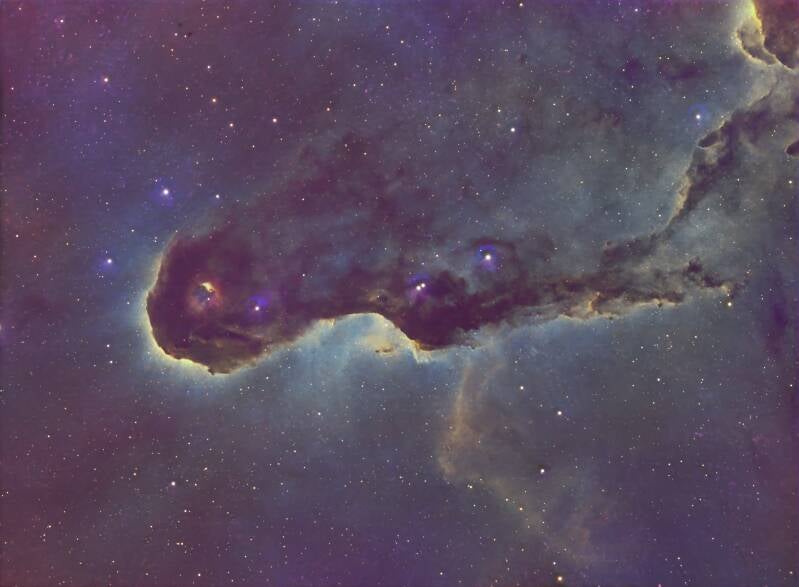
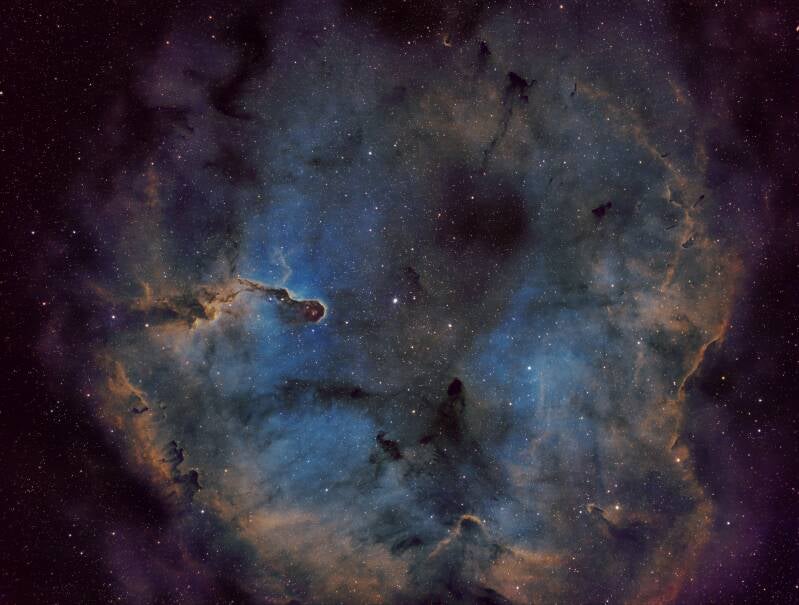
The Elephant's Trunk (LDN 1105) is part of the larger nebula IC 1396A known at the Elephant's Trunk Nebula. The nebula is about 2,400 light years away. The region has dense globules of gas and in the image the outline is highlighted by a group of massive stars behind the section we see.
I have included a wide field image of the whole nebula taken in 2025.
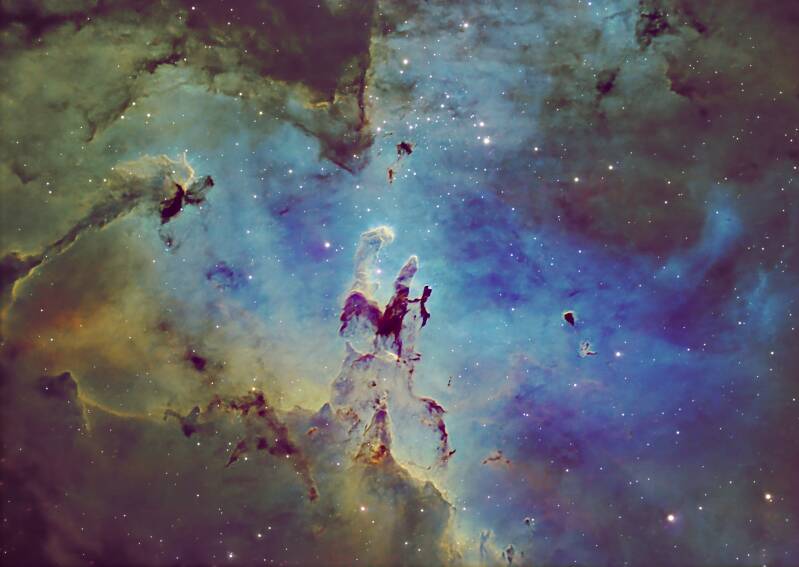
The Pillars of Creation are found in the Eagle Nebula (Messier 16). This can be seen through a telescope low down on the southern horizon in the UK and northern hemisphere in the summer months. The pillars of creation were made famous through the image taken by the Hubble Space Telescope. I imaged this in early July 2026.
The nebula is a star forming region of our galaxy 5,700 light years away.
The Great Globular Cluster
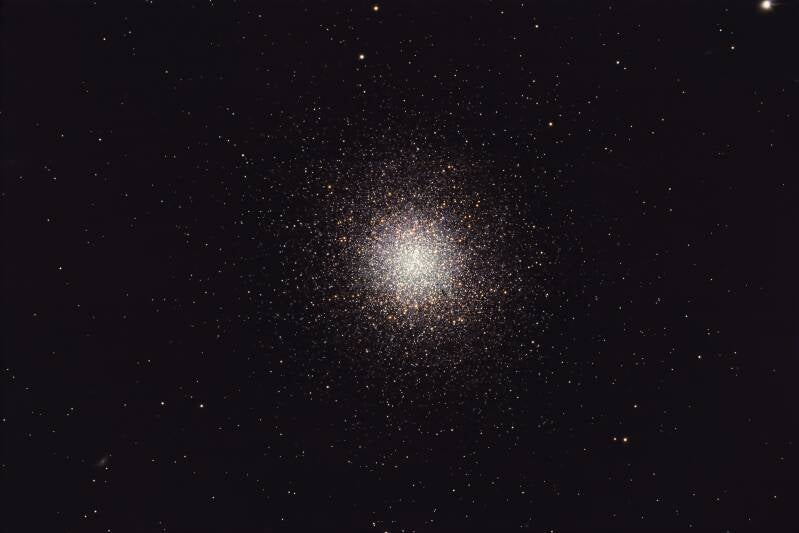
The Great Globular cluster in the constellation of Hercules is a star city of up to half a million stars that orbits the centre of our galaxy the Milkyway. There are several hundred globular clusters in our galaxy and they are a favourite target of mine. The stars are very ancient around 11 billion years old.
Bodes Galaxy (Messier 81)
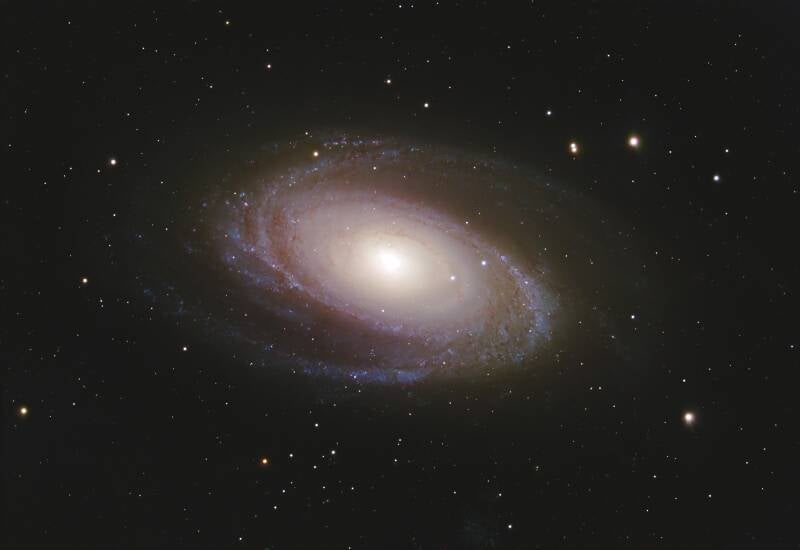
Bode's Galaxy designated Messier 81 is a spiral galaxy 12 million light years away in the constellation of Ursa Major (also known as the Plough). This image was published in the BBC 'Sky at Night' magazine in March 2026.
The Veil Nebula
The Veil Nebula is in the constellation of Cygnus that can be seen in Northern latitudes from late Spring into the Autumn.
The Veil Nebula is spread across 3 degrees of the sky that's 6 times the width of the full Moon. It's difficult to see with a telescope but is a fantastic target for astrophotography.
This is the full image of the nebula taken with my small wide field refractor telescope in 2025.

The Veil Nebula is a supernova remnant from a star that exploded about 20,000 years ago. It is about 2,400 light years away. The nebula has several distinct sections: the East Veil. Pickering's Triangle and the West Veil. There also other lesser known sections.
Take a look at my recent images of these fantastic parts of the nebula.
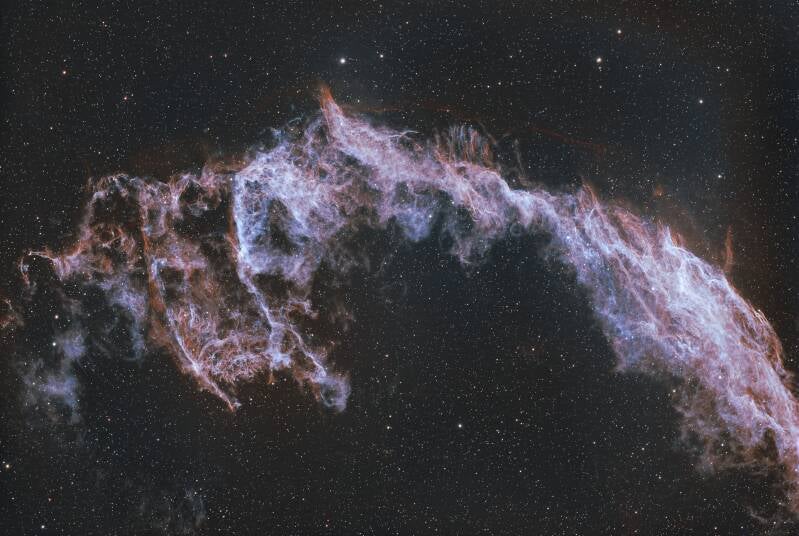
East Veil Nebula
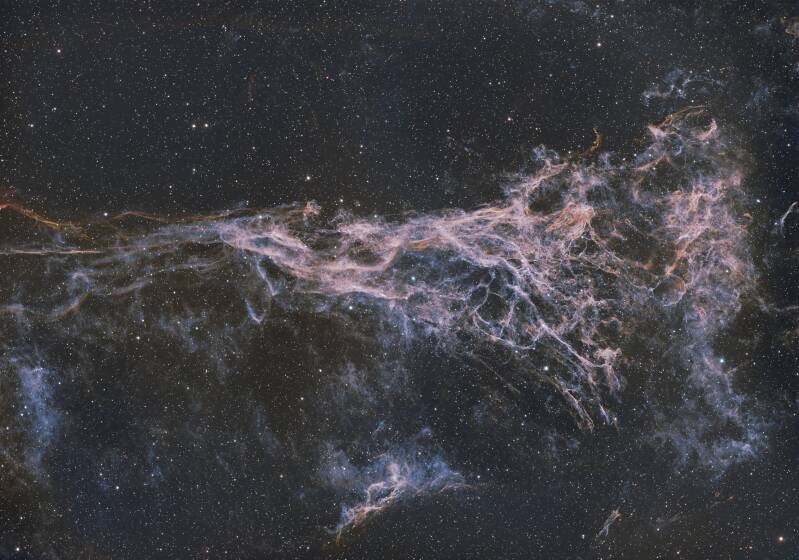
Pickering's Triangle
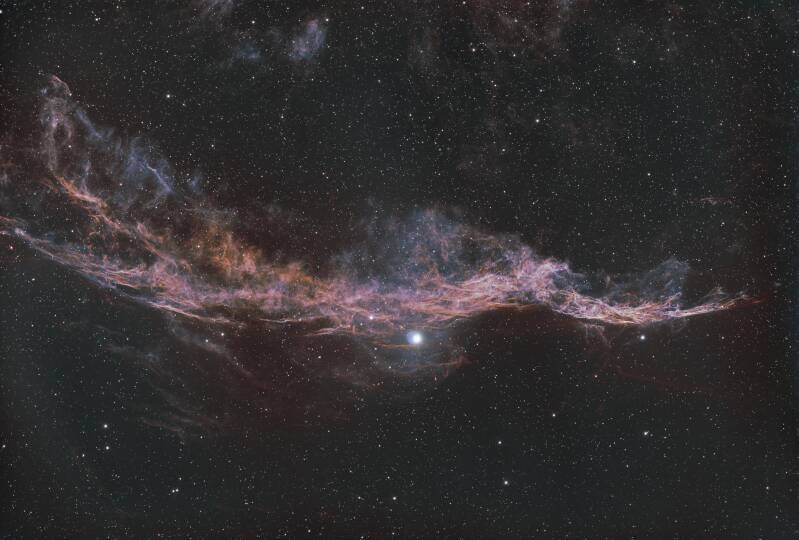
West Veil Nebula
Explore our Universe
The vastness of our Universe is unimaginable. View its wonders in bite sized chunks below.
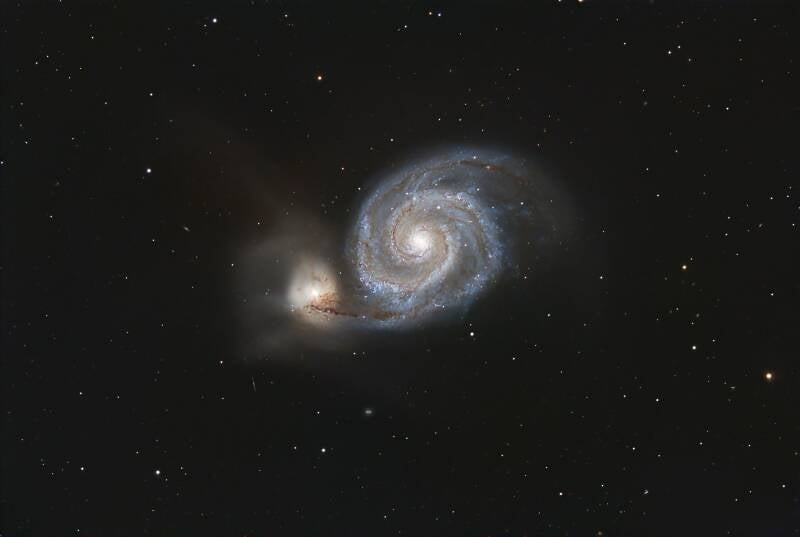
The Whirlpool Galaxy: Distance 31 million light years.
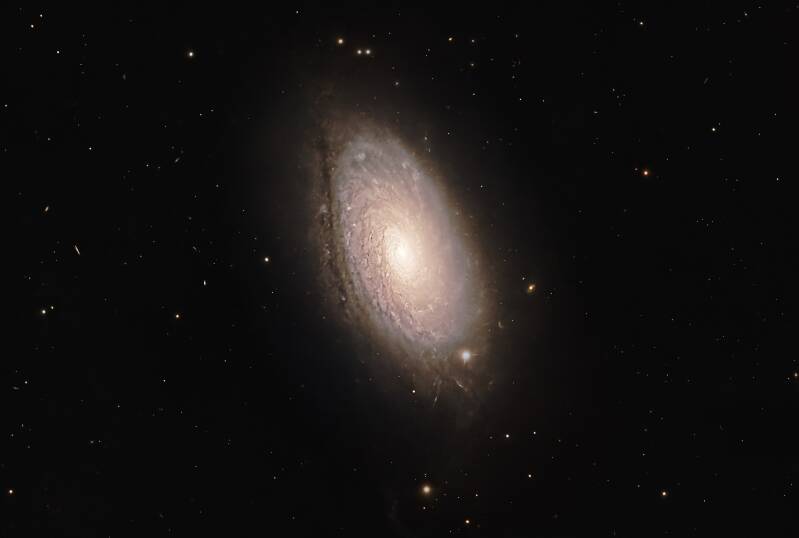
The Sunflower Galaxy: Distance 29 million light years.
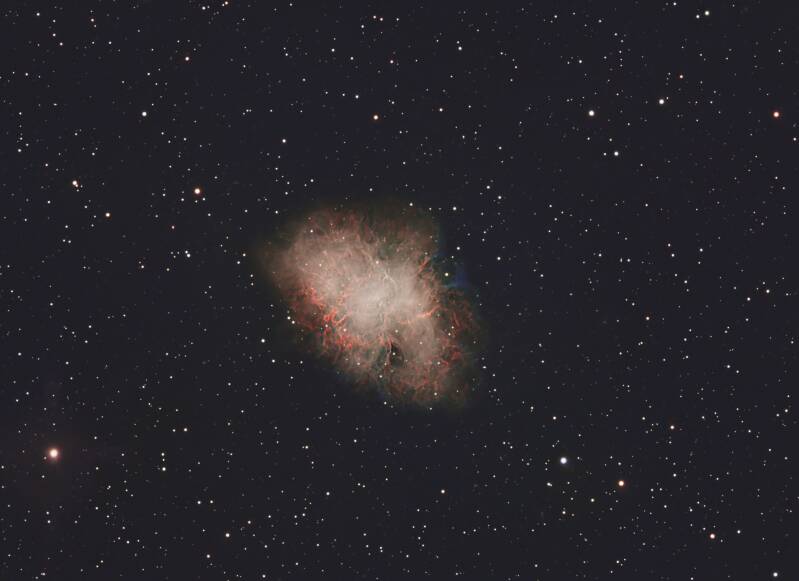
The Crab Nebula: Distance 6,500 light years. A supernova remnant in our galaxy.
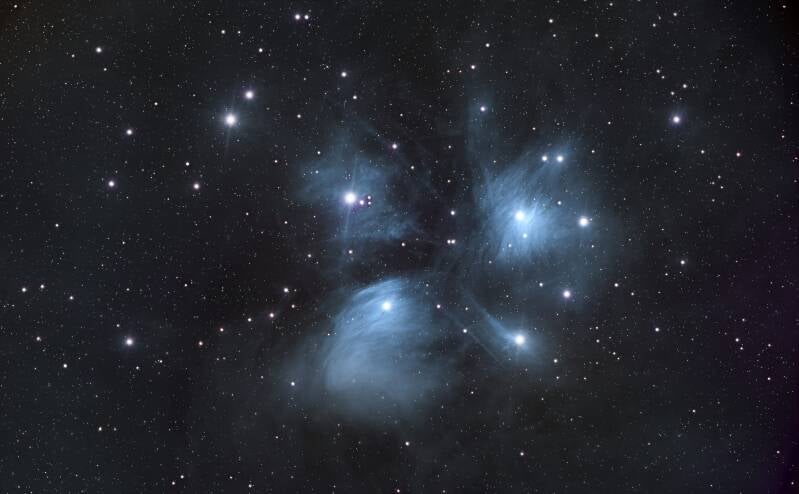
The Pleiades: A young star cluster 444 light years away. Visible with the naked eye in the northern hemisphere through Autumn and Winter.
Images of the Solar System
Imaging objects in the Solar System poses different challenges. As the planets and the Earth move in their orbits around the Sun they change positions in the night sky. The inner planets of Mercury and Venus move around the Sun more quickly than the Earth and are only visible at twilight in the evening sunset or sunrise. Mercury in particular is difficult to see and as yet I've never managed to image it as it is so low down in the sky.
Mars: The Red Planet
Mars orbits further out from Earth and only get close once every 26 months. Mars also has an eccentric orbit and it's distance at opposition (when it is at it's closest) varies by millions of miles. This means that it's apparent size when viewed varies. Here are some images I captured of Mars at a favourable opposition in 2020. South is at the top and the shrinking south polar cap is visible at the top.
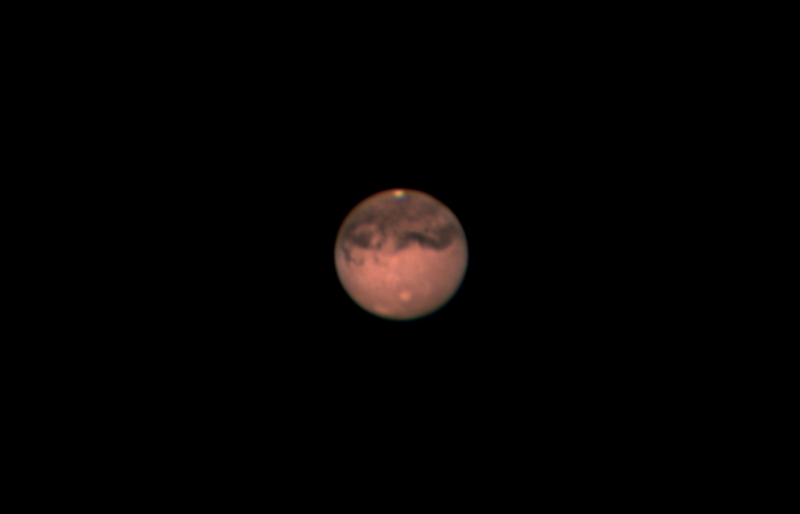
Mars: October 14th 2020. The lighter circle near the bottom of the Image is the huge extinct volcano - Olympus Mons.
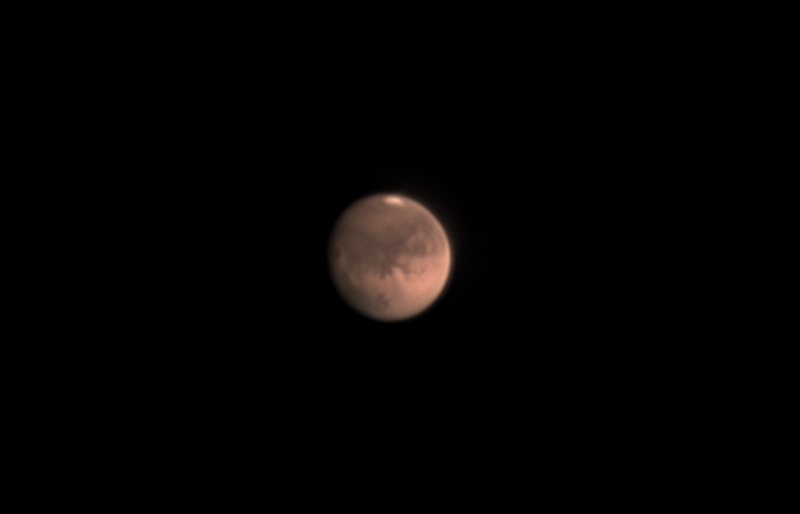
Mars September 18th 2020: The Solis Lacus area: The dark area just right of centre is part of the Valles Marineris which is the largest canyon on the solar system.
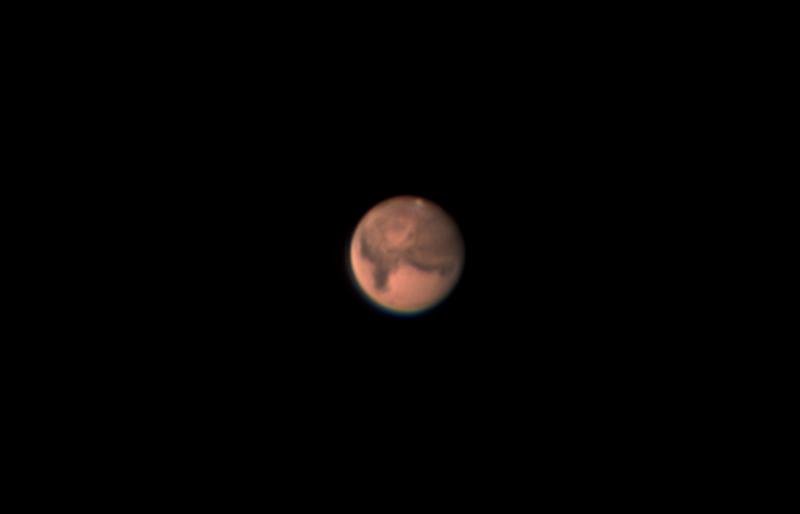
Mars November 3rd 2020: The Earth was moving further away from Mars at this point as Opposition was in October of that year. This image shows the first recorded detail of the surface of Mars the Syrtis Major - the V shaped dark area at the left of the image. Christiaan Huygens discovered it through his telescope in 1659 and made a drawing of it!
JUPITER: The King of the Planets
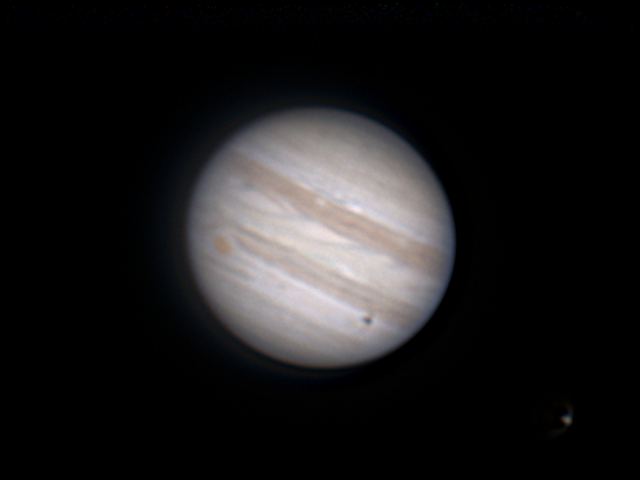
Jupiter the largest of all the planets in our solar system. It orbits way beyond Mars and the main asteroid belt. It shines brightly much of the year. It is a fantastic planet to image or view through a telescope. It has 'belts' of clouds that can be seen in a modest telescope but by imaging using high frame rate video it is possible to bring out subtle detail. It's four largest Moons can be seen in a small telescope. The image below was taken in early 2025 and shows Jupiter's moon Io and it's shadow on the upper clouds of the planet. The famous red spot is also visible near the left limb of the planet.
SATURN: Gem of the Solar System
Saturn and it's magnificent ring system is visible in a modest telescope but with a larger telescope and high magnification it becomes possible to see the Cassini division in the rings and cloud belts similar to those of Jupiter. Saturn is the second largest planet in the solar system but still about half the size of Jupiter and about twice as far out from the Sun at a distance of 886,000,000 miles.
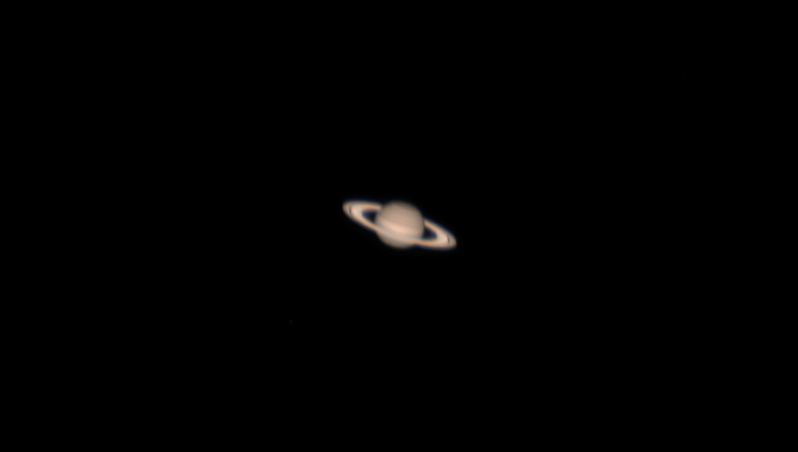
Saturn imaged August 13th 2022.
URANUS & NEPTUNE
The Ice Giants of Uranus and Neptune are so distant from Earth that the appear as only tiny dots in amateur telelescopes. Both have distinctive blue colouring.
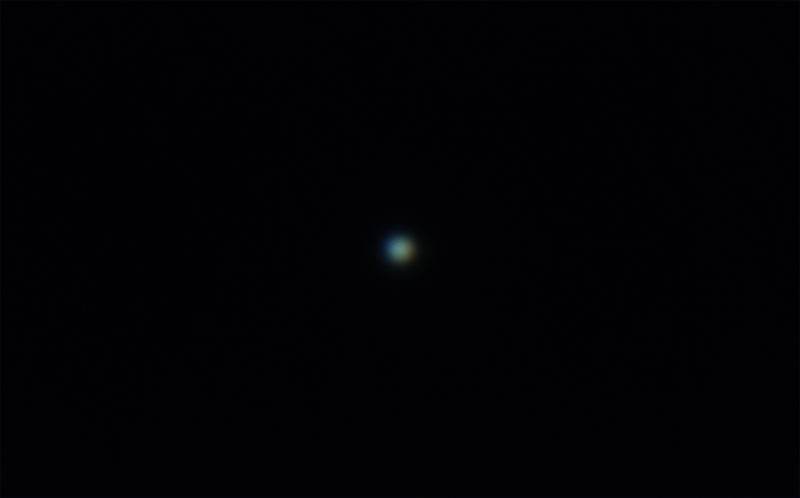
Uranus: Imaged October 3rd 2021
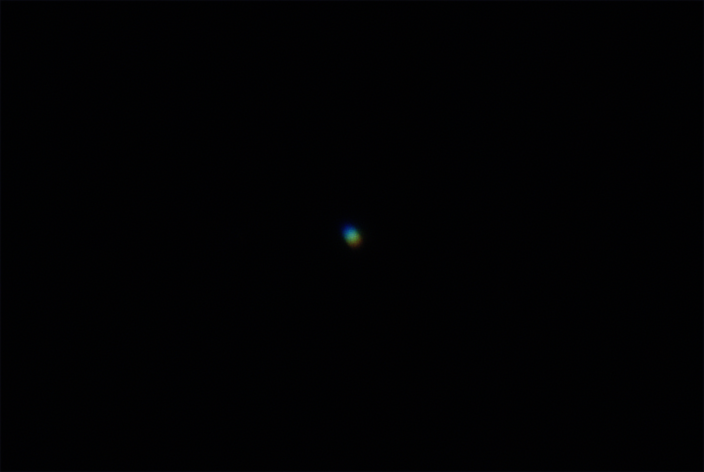
Neptune imaged October 10th 2021
THE MOON
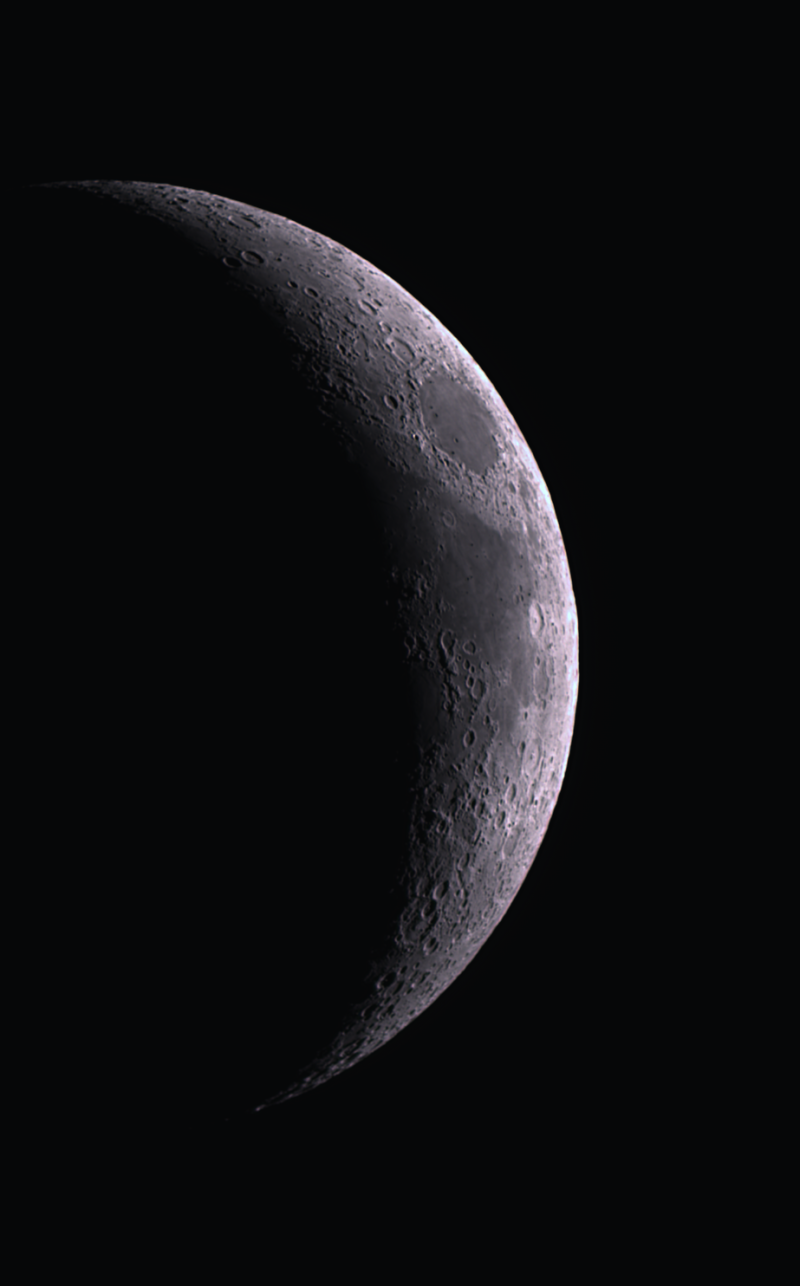
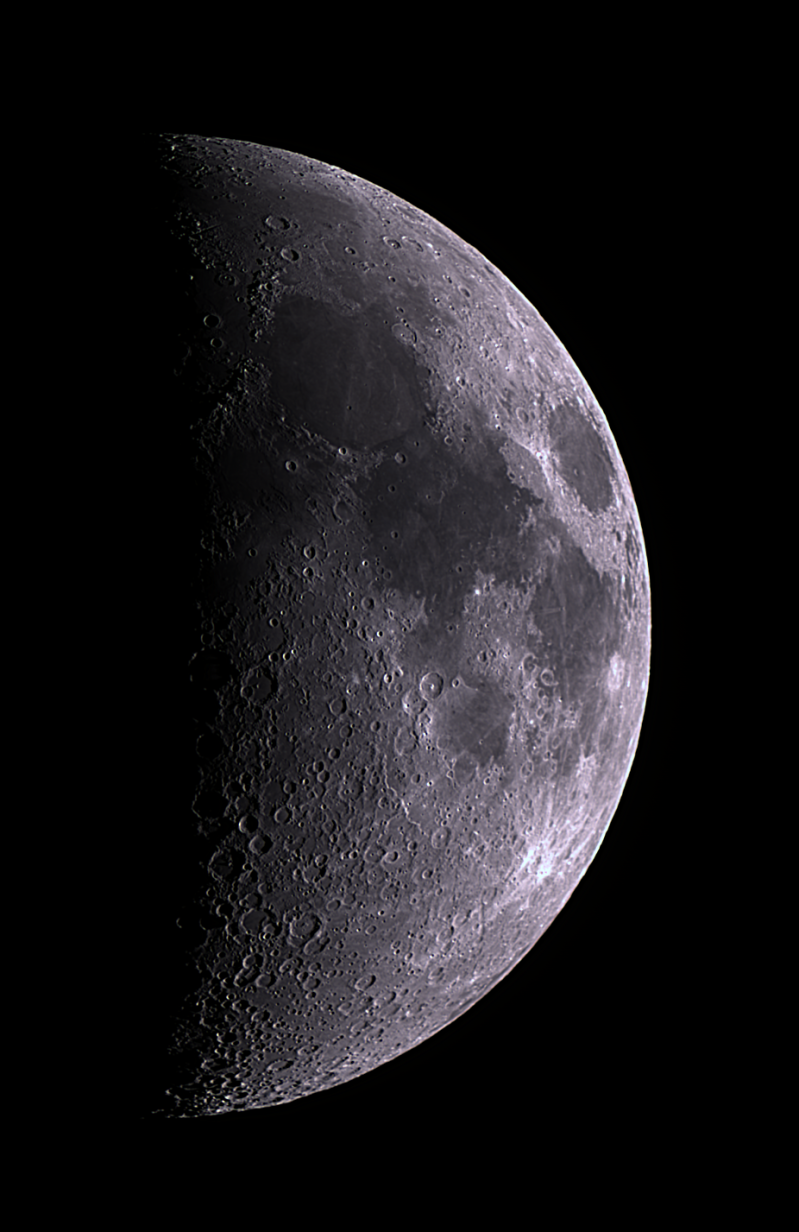
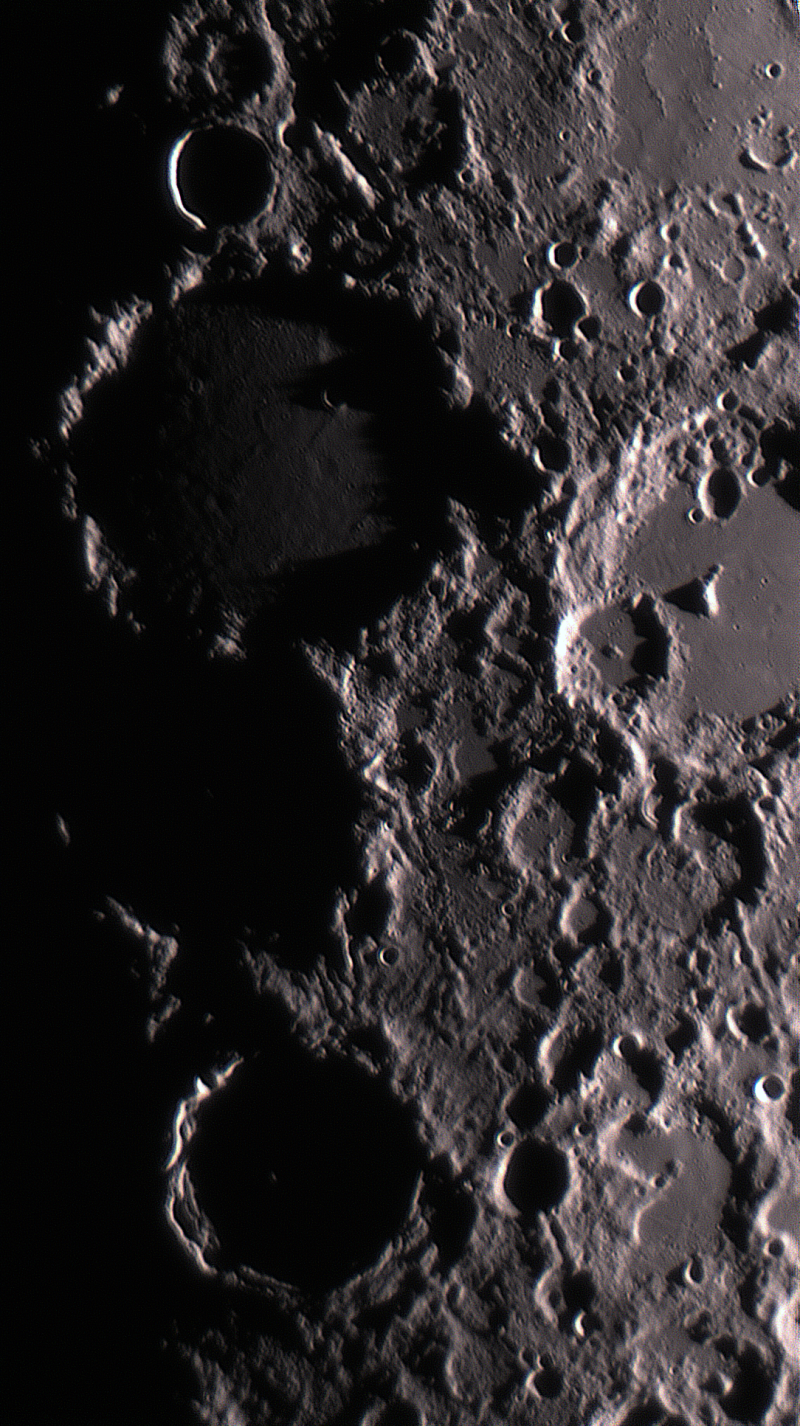
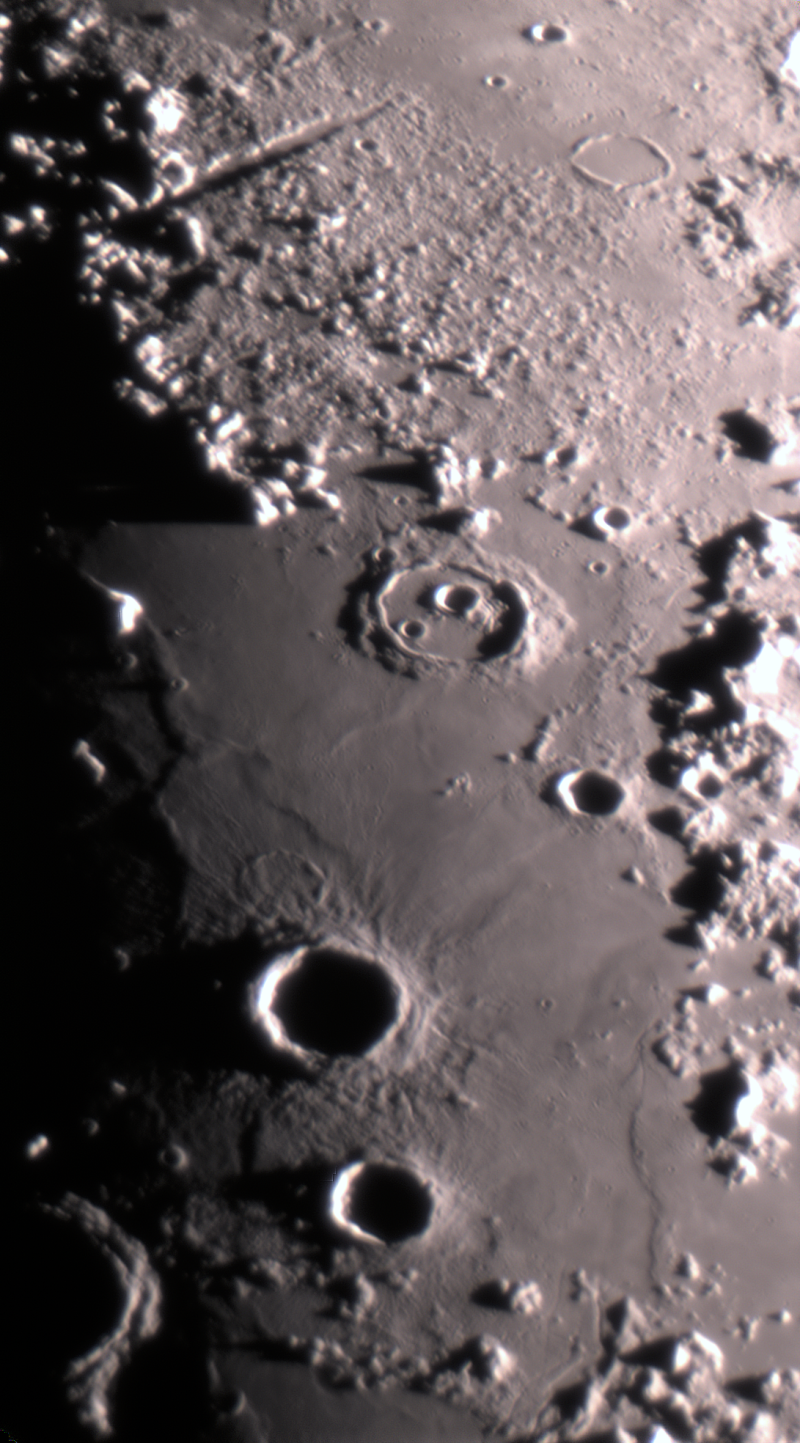
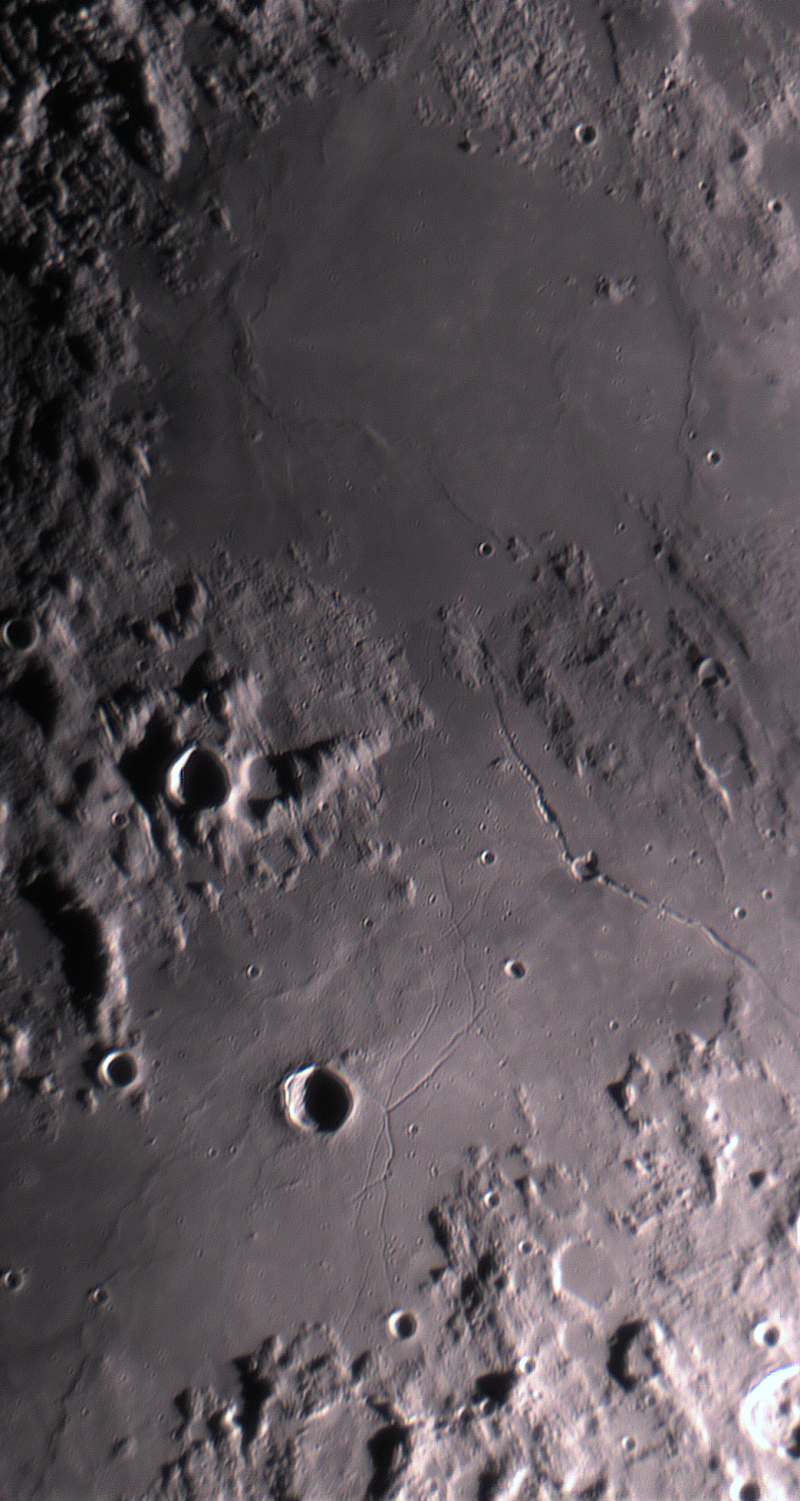
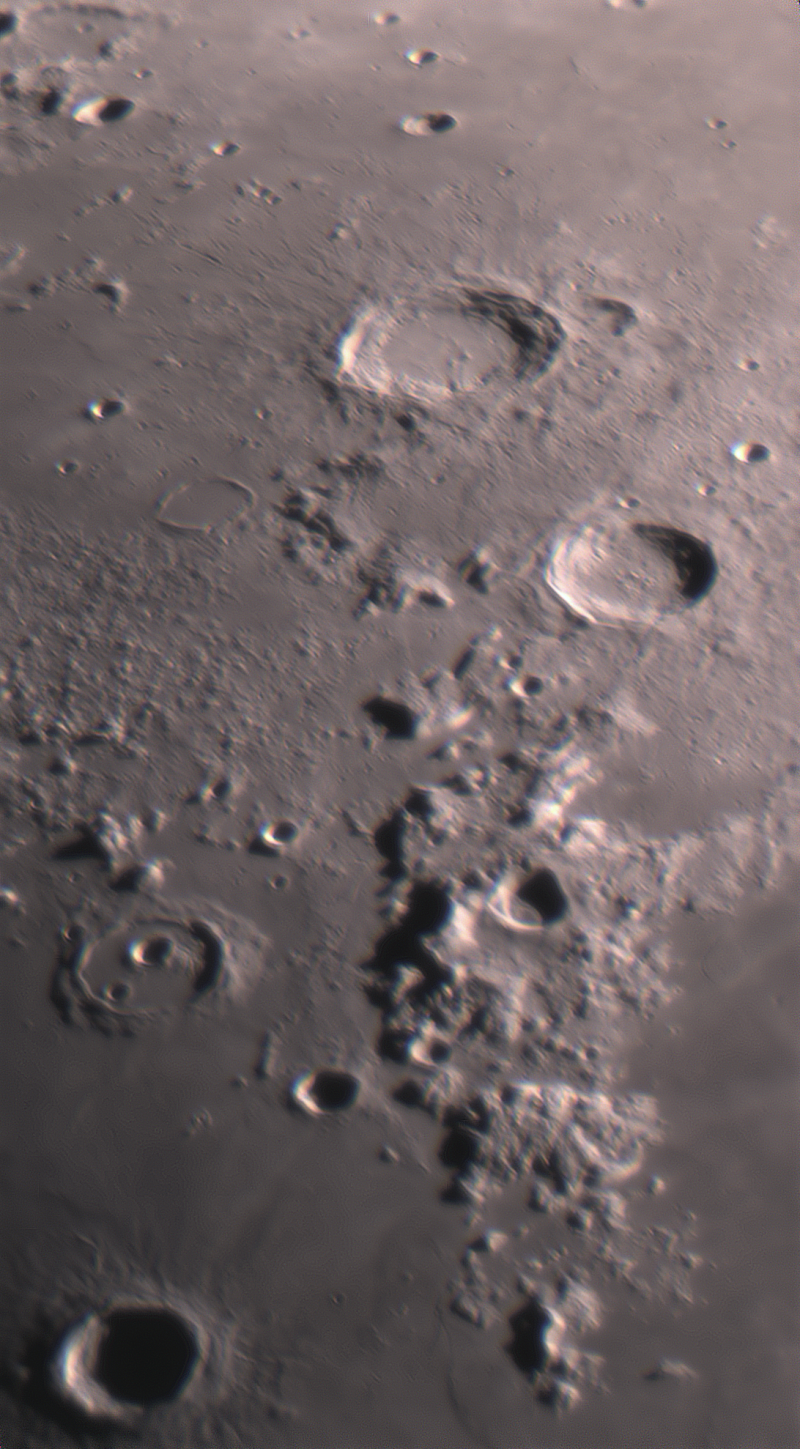
Our nearest neighbour in space - the Moon provides stunning views even in a modest sized telescope. It's craters, mountains and plains provide a visual feast. The Moon is a sight that I have returned to many times over the years and I've included some of my favourite images that I have captured below.
Phases of the Moon


The Moon: Up Close
Address
Goole
East Riding of Yorkshire
United Kingdom
Astro Images
by Eamonn Holliday
Contact
eamonnholliday1@gmail.com
Add comment
Comments
And the Gardner space doofus has landed on the right site.. Excellent Work.
Hot damn Eamonn! More than my brain can take in on this boiling day - impressive to say the least. Good to have the info too. Look forward to seeing your starry stuff some more !